

A brass stop valve is a crucial component in many fluid control systems, known for its durability, corrosion resistance, and reliable performance. As a supplier of high - quality brass stop valves, I'm excited to share with you how these valves work and their significance in various applications.
The Basics of a Brass Stop Valve
A brass stop valve, also commonly referred to as a Brass Stop Valve, is a type of valve used to control the flow of liquids or gases in a pipeline. It operates on a simple yet effective principle: the valve can either be fully open to allow unrestricted flow or fully closed to stop the flow completely. This on - off functionality makes it ideal for applications where a complete shut - off is required, such as in plumbing systems, industrial processes, and heating systems.
Components of a Brass Stop Valve
Before delving into how it works, let's first understand the main components of a brass stop valve:
- Valve Body: Made of brass, which is an alloy of copper and zinc. The brass material provides excellent strength and corrosion resistance, making it suitable for use with a wide range of fluids, including water, steam, and some chemicals.
- Valve Seat: This is a precisely machined surface inside the valve body where the valve disc sits when the valve is closed. A good valve seat ensures a tight seal to prevent leakage.
- Valve Disc: The disc is the part that moves up and down to open or close the valve. When the valve is open, the disc is lifted away from the valve seat, allowing fluid to flow through the valve. When closed, the disc presses against the valve seat, blocking the flow.
- Stem: The stem connects the valve disc to the actuator (usually a handwheel or a lever). When the actuator is turned, the stem moves the valve disc up or down.
- Packing: Packing is used to prevent leakage around the stem. It is usually made of materials like graphite or PTFE, which can withstand high pressures and temperatures.
How a Brass Stop Valve Works
The operation of a brass stop valve is relatively straightforward. Let's break it down into the opening and closing processes:
Opening the Valve
When you want to allow fluid to flow through the valve, you turn the handwheel or lever in the appropriate direction (usually counter - clockwise). As you turn the handwheel, the stem begins to rotate. Since the stem is threaded, this rotational motion is converted into linear motion, causing the stem to rise. As the stem rises, it pulls the valve disc away from the valve seat. Once the valve disc is fully lifted, there is an unobstructed path for the fluid to flow through the valve, and the valve is in the fully open position.
Closing the Valve
To stop the flow of fluid, you turn the handwheel or lever in the opposite direction (usually clockwise). The stem then rotates in the opposite direction and starts to descend. As the stem descends, it pushes the valve disc towards the valve seat. When the valve disc makes full contact with the valve seat, it creates a tight seal, preventing any fluid from passing through the valve. The valve is now in the fully closed position.
Types of Brass Stop Valves
There are different types of brass stop valves, each with its own characteristics and applications:
Brass On - off Valve
This is the most basic type of brass stop valve. It is designed for simple on - off control of fluid flow. These valves are commonly used in residential plumbing systems, such as for shutting off the water supply to individual fixtures like sinks, toilets, and faucets.
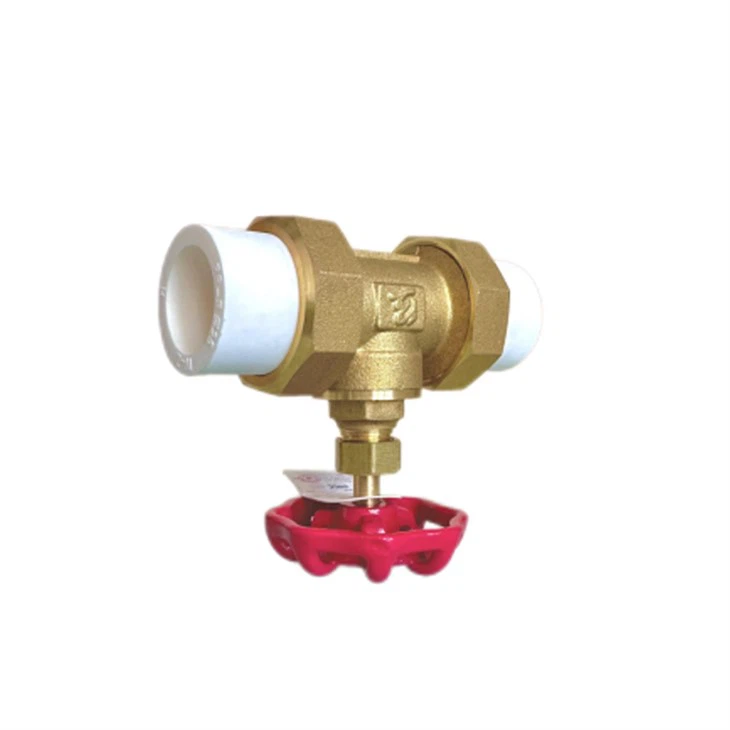
PPR Brass Stop Valve
PPR (Polypropylene Random Copolymer) brass stop valves are specifically designed for use with PPR pipes. They have a PPR end connection that can be easily welded or connected to PPR pipes, providing a reliable and leak - free connection. These valves are widely used in modern plumbing systems where PPR pipes are the preferred choice due to their corrosion resistance and long service life.
Applications of Brass Stop Valves
Brass stop valves have a wide range of applications across different industries:
Plumbing Systems
In residential and commercial plumbing, brass stop valves are used to control the water supply to various fixtures. They allow for easy maintenance and repair of individual plumbing components by isolating the water flow when needed. For example, if a faucet needs to be replaced, the brass stop valve can be closed to stop the water supply to that particular fixture without affecting the rest of the plumbing system.
Industrial Processes
In industrial settings, brass stop valves are used in a variety of processes involving the control of fluids. They can be found in chemical processing plants, where they are used to control the flow of chemicals, in food and beverage industries for controlling the flow of liquids, and in power generation plants for steam and water control.
Heating Systems
In heating systems, such as boilers and radiators, brass stop valves are used to control the flow of hot water or steam. They can be used to isolate individual radiators for maintenance or to adjust the flow rate to achieve the desired temperature in different parts of the building.
Advantages of Using Brass Stop Valves
There are several reasons why brass stop valves are a popular choice in many applications:
- Durability: Brass is a strong and long - lasting material. It can withstand high pressures and temperatures, making it suitable for use in demanding environments.
- Corrosion Resistance: Brass has excellent corrosion resistance, especially when compared to other metals. This makes it ideal for use with water and many chemicals, ensuring a long service life without the risk of rust or corrosion.
- Ease of Installation and Maintenance: Brass stop valves are relatively easy to install and maintain. They can be easily connected to pipes using standard pipe fittings, and any necessary repairs or replacements can be carried out with basic tools.
- Cost - Effective: Compared to some other types of valves made from more expensive materials, brass stop valves offer a good balance between performance and cost. They provide reliable operation at a reasonable price.
Quality Assurance in Our Brass Stop Valves
As a supplier, we understand the importance of providing high - quality brass stop valves. We ensure that our valves are manufactured to the highest standards. Our production process includes strict quality control measures at every stage, from the selection of raw materials to the final inspection of the finished product. We use advanced manufacturing techniques to ensure that the valve seats are perfectly machined and the valve discs provide a tight seal. Our valves are also tested under various pressure and temperature conditions to ensure their reliability and performance.

Contact Us for Your Brass Stop Valve Needs
If you are in the market for high - quality brass stop valves for your plumbing, industrial, or heating applications, we would love to hear from you. Our team of experts can help you choose the right valve for your specific requirements. Whether you need a simple Brass On - off Valve for a residential plumbing project or a PPR Brass Stop Valve for a modern plumbing system, we have the products and the knowledge to meet your needs. Contact us today to start a discussion about your procurement requirements.
References
- "Valve Handbook" by J. S. Tuzson
- "Plumbing Engineering: Design and Installation" by C. S. Kiang
- Industry standards and specifications for brass valves