

Exhaust valves play a crucial role in various systems, ensuring the proper release of gases and maintaining the efficiency and safety of equipment. As an exhaust valve supplier, I have in - depth knowledge of different types of exhaust valves and their applications. In this blog, I will introduce you to the main types of exhaust valves available in the market.
1. Float - Type Exhaust Valves
Float - type exhaust valves are one of the most common types. They operate based on the principle of buoyancy. Inside the valve, there is a float that rises and falls with the water or fluid level. When the system is filled with fluid, the float rises, closing the valve and preventing the escape of the fluid. When air or gas accumulates in the system, the fluid level drops, causing the float to fall and opening the valve to release the trapped air.
These valves are widely used in water supply systems, such as pipelines and water storage tanks. In a water distribution network, air can enter the pipes during filling, draining, or due to leaks. If this air is not removed, it can cause problems like reduced flow, water hammer, and corrosion. Float - type exhaust valves effectively eliminate these issues by continuously venting the air.
2. Orifice Exhaust Valves
Orifice exhaust valves are designed to release small amounts of air continuously. They have a small orifice through which air can escape while preventing the loss of large amounts of fluid. These valves are often used in conjunction with larger exhaust valves to provide a more comprehensive air - venting solution.
In heating and cooling systems, orifice exhaust valves are essential. For example, in a closed - loop heating system, air can be entrained in the water as it circulates through the pipes and heat exchangers. The continuous release of this air by orifice exhaust valves helps maintain the system's efficiency and prevents the formation of air pockets that can disrupt the flow of the heating medium.
3. Combination Exhaust Valves
Combination exhaust valves combine the functions of both float - type and orifice exhaust valves. They are capable of releasing large volumes of air during the filling of a system and also continuously venting small amounts of air during normal operation.
In large - scale industrial water systems, such as those in power plants or manufacturing facilities, combination exhaust valves are highly beneficial. They can handle the initial large - volume air release when the system is being filled and then ensure the long - term removal of any air that accumulates during operation. This dual functionality helps to optimize the performance of the system and reduce maintenance requirements.

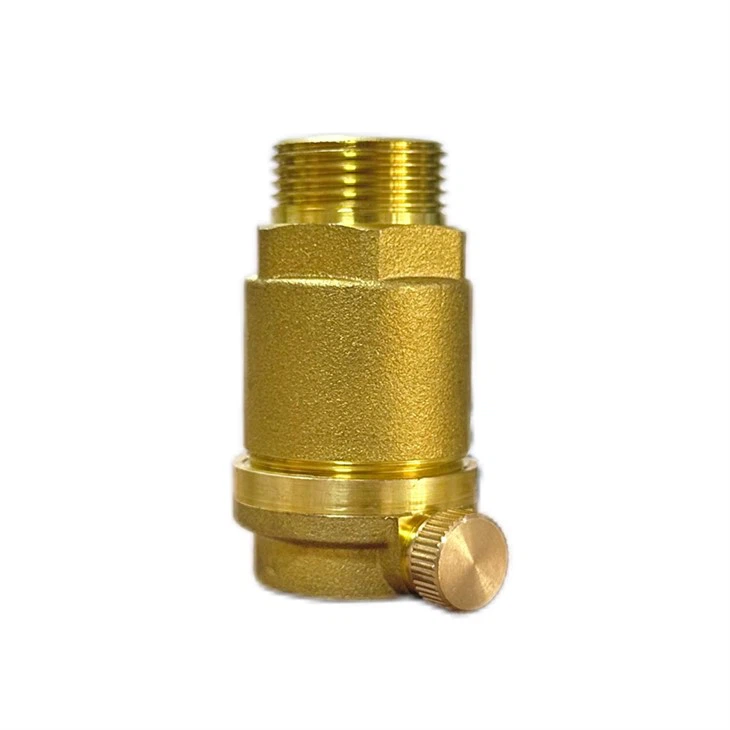
4. Brass Exhaust Valve
Brass exhaust valves are made from brass, a metal alloy known for its corrosion resistance, durability, and good thermal conductivity. These valves are suitable for a wide range of applications, including domestic water systems, plumbing, and some light - industrial applications.
The corrosion - resistant property of brass makes brass exhaust valves ideal for use in water - based systems. They can withstand the presence of water and various chemicals in the water without corroding easily. This ensures a long service life and reliable performance. Additionally, the good thermal conductivity of brass allows these valves to handle moderate temperature changes without significant deformation or loss of functionality.
5. Stainless Steel Exhaust Valves
Stainless steel exhaust valves are another popular choice, especially in harsh environments. Stainless steel is highly resistant to corrosion, oxidation, and high temperatures.
In chemical processing plants, where the fluids being handled may be corrosive or the operating temperatures are high, stainless steel exhaust valves are the preferred option. They can withstand the aggressive chemicals and high - temperature conditions without deteriorating, ensuring the safety and efficiency of the system. Also, in marine applications, where the valves are exposed to saltwater, stainless steel exhaust valves offer excellent corrosion resistance, making them suitable for use on ships and offshore platforms.
6. Diaphragm Exhaust Valves
Diaphragm exhaust valves use a flexible diaphragm to control the opening and closing of the valve. The diaphragm moves in response to the pressure difference between the inside and outside of the valve.
These valves are often used in systems where precise control of the exhaust process is required. For example, in some pharmaceutical manufacturing processes, where the release of gases needs to be carefully regulated to maintain a sterile environment, diaphragm exhaust valves can provide the necessary level of control. The flexible diaphragm can be designed to respond to very small pressure changes, allowing for accurate venting of gases.
7. Pilot - Operated Exhaust Valves
Pilot - operated exhaust valves are controlled by a pilot valve. The pilot valve senses the pressure or other operating conditions in the system and then sends a signal to the main exhaust valve to open or close.
In high - pressure systems, such as those in oil and gas pipelines, pilot - operated exhaust valves are crucial. They can handle large pressure differentials and ensure that the exhaust process is carried out safely and efficiently. The pilot valve provides an additional layer of control, allowing for more precise adjustment of the valve operation based on the specific requirements of the system.
When choosing an exhaust valve for your application, several factors need to be considered. These include the type of fluid or gas in the system, the operating pressure and temperature, the flow rate, and the required level of control. As an exhaust valve supplier, I can provide you with professional advice and high - quality products to meet your specific needs. If you are interested in purchasing exhaust valves or have any questions about our products, please feel free to contact us for further discussion and procurement negotiation.
References
- ASME Boiler and Pressure Vessel Code.
- Manufacturer's manuals and technical documents for exhaust valves.
- Industry standards for fluid handling and piping systems.