


Zhejiang Bozheng Copper Co., Ltd. is located in the "the valve capital of China"-Yuhuan (a city by the East China Sea in the Yangtze River Delta economic circle). Founded in 1998, the company is a comprehensive enterprise integrating research and development, design, manufacturing, sales and service. After decades of exploration and development, "Bozheng" has become a high-quality brand in the domestic valve industry.

Quality Control
We inspect their corrosion resistance and mechanical properties with other equipment. Throughout the production process, we strictly control the processing accuracy and surface quality of our products.
Efficient Production
From initially producing over 1,000 products per day to now exceeding 5,000 products per day, with an average of one product completed every 15 seconds.
Wide Range of Applications
Our products are widely used in construction, plumbing, gas, chemical, petroleum, electric power and many other industries.
Patent Certifications
Rich Experience in Valve Industry; ISO9001 Quality Management System Certification.
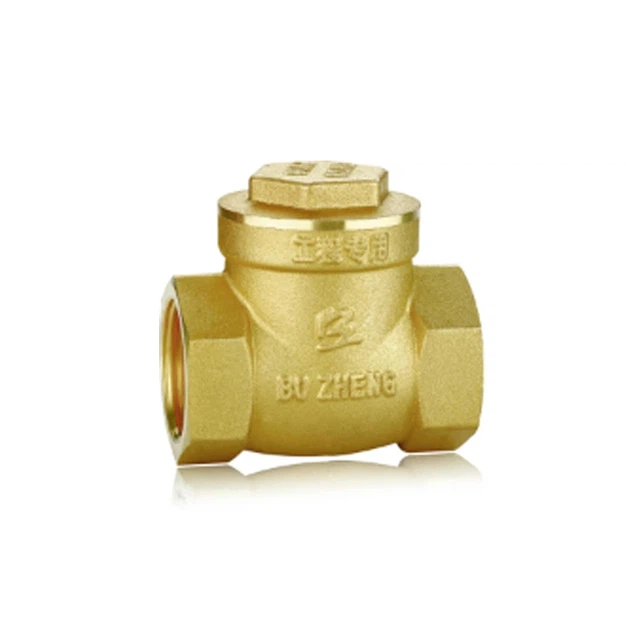
The brass check valve is made of high-quality brass plates by stamping and welding. It has the characteristics of light weight, high strength and good sealing performance. It is suitable for opening and closing on pipelines of water and oil media. This product can replace the ball valve and plug valve in the stop valve and throttling device, and is widely used on pipelines in petrochemical systems to cut off or connect pipeline media.
-
![DN15 Brass Check Valve]() DN15 Brass Check ValveEfficient Fluid Flow Control: Our DN15 brass check valve is meticulously designed to regulate fluid flow within plumbing systems with unparalleled efficiency and reliability. Its precise engineeringread more
DN15 Brass Check ValveEfficient Fluid Flow Control: Our DN15 brass check valve is meticulously designed to regulate fluid flow within plumbing systems with unparalleled efficiency and reliability. Its precise engineeringread more -
![PPR Brass Check Valve]() PPR Brass Check ValveDual Material Construction: Our PPR Brass Check Valve features a body crafted from high-quality PPR material, renowned for its outstanding chemical resistance and thermal stability. This isread more
PPR Brass Check ValveDual Material Construction: Our PPR Brass Check Valve features a body crafted from high-quality PPR material, renowned for its outstanding chemical resistance and thermal stability. This isread more -
![Industrial Check Valve]() Industrial Check ValveBackflow Prevention: Our Industrial Check Valve is meticulously engineered to prevent backflow or reverse flow of fluid within industrial piping systems. Its innovative design ensures that fluid canread more
Industrial Check ValveBackflow Prevention: Our Industrial Check Valve is meticulously engineered to prevent backflow or reverse flow of fluid within industrial piping systems. Its innovative design ensures that fluid canread more -
![Brass Threaded Check Valve]() Brass Threaded Check ValveEfficient Backflow Prevention: Our Brass Threaded Check Valve is engineered to prevent backflow and ensure fluid flows in one direction, safeguarding your piping system against contamination andread more
Brass Threaded Check ValveEfficient Backflow Prevention: Our Brass Threaded Check Valve is engineered to prevent backflow and ensure fluid flows in one direction, safeguarding your piping system against contamination andread more -
![Brass Integrated Vertical Check Valve]() Brass Integrated Vertical Check ValveEnhance your fluid control systems with our premium Brass Integrated Vertical Check Valve, meticulously engineered to offer exceptional performance, durability, and reliability in a variety ofread more
Brass Integrated Vertical Check ValveEnhance your fluid control systems with our premium Brass Integrated Vertical Check Valve, meticulously engineered to offer exceptional performance, durability, and reliability in a variety ofread more


Benefits of Brass Check Valve
Excellent corrosion resistance
Brass water valves are not easily corroded and can be used for a long time.
High temperature resistance
Brass check valves can withstand higher temperatures and are suitable for some high temperature working environments.
Good sealing performance
Brass check valves have good sealing performance and can prevent medium backflow.
Threaded connection
Brass check valves use threaded connection, which is easy to disassemble and easy to repair.
Easy to operate
Brass check valves are easy to operate and only need to rotate the handle to complete the switch.
Good thermal conductivity
Brass has good thermal conductivity and can still maintain a certain thermal conductivity at high temperatures, which can effectively enhance the heat dissipation performance of the valve.
The principle of brass check valve to prevent medium backflow is to use the valve disc to close the valve under the action of medium pressure. Under the reverse pressure of the medium, the valve disc is pushed open to allow the medium to pass through the valve.
There is a spring mechanism at the bottom of the valve. When the flow direction of the medium is consistent with that of the valve, the spring is in a relaxed state, and the valve disc will open with the flow of the medium, and the medium can pass freely; when the flow direction of the medium is opposite to that of the valve, the spring will be compressed, and the reaction force will tightly close the valve disc, and the valve cannot pass the medium, thereby achieving the effect of preventing medium backflow.

Structural Composition of Brass Check Valve
The main components of brass check valve include: valve body, valve cover, valve core, spring, gasket, etc.
Valve body
The valve body is the main part of the brass check valve, which is generally forged with high-quality brass material to ensure the strength and rigidity of the valve body.
01
Valve cover
The valve cover is the other end of the brass check valve and is connected to the valve body. It is usually made of cast iron material and has good corrosion resistance and wear resistance.
02
Valve core
The valve core is a key component inside the brass check valve. It can move up and down freely to achieve the normal flow of the medium or prevent the medium from flowing back. The valve core is usually made of stainless steel and has excellent corrosion resistance and mechanical strength.
03
Spring
The spring is an elastic element inside the brass check valve. It is mainly used to provide the rebound force of the valve core and a reliable closing function. The spring material usually uses high-quality stainless steel or high-quality spring steel.
04
Gasket
The gasket is an important sealing component of the brass check valve, and its sealing performance directly affects the quality and service life of the valve. Commonly used sealing gasket materials include butyrolactone, fluororubber, EPDM rubber, etc.
05
Application Scenarios of Brass Check Valves
Brass check valves are a type of valve that prevents the backflow of media and have a wide range of application scenarios. The following are common application scenarios of brass check valves:
Tap water pipelines
In tap water pipelines, in order to prevent pollution, some water plants, reservoirs and other institutions require the use of check valves.
Industrial pipelines
In industrial fields such as metallurgy, chemical industry, construction, and electricity, brass check valves are often used to prevent backflow of media and protect equipment.
Firefighting system
Brass check valves play a very important role in urban firefighting systems. In firefighting systems, if the brass check valve fails, it will cause the water flow to reverse, seriously affecting firefighting work.
Air conditioning pipelines
Brass check valves also have important applications in air conditioning pipelines. Since the medium in the air conditioning system is gas, if the medium flows back, it will cause the performance of the equipment to decline. Brass check valves can solve this problem well.
Brass Check Valves vs PVC Check Valves
Brass valves and PVC valves are both commonly used in plumbing and fluid control applications, but they have distinct characteristics, advantages, and disadvantages.
Brass Valves: Brass valves are made from an alloy of copper and zinc, which gives them good durability, strength, and corrosion resistance. Brass valves are suitable for a wide range of applications, including residential, commercial, and industrial settings.
PVC Valves: PVC valves are made from polyvinyl chloride, a synthetic plastic polymer. They are lightweight, corrosion-resistant, and suitable for non-industrial applications, particularly in residential settings.
Brass Valves: Brass valves offer excellent corrosion resistance, making them suitable for use with a variety of fluids, including water, oil, and gas.
PVC Valves: PVC valves are highly resistant to corrosion and chemical reactions, making them ideal for applications involving corrosive fluids and environments.
Brass Valves: Brass valves are generally stronger and more durable than PVC valves. They can withstand higher pressures and temperatures, making them suitable for applications with demanding conditions.
PVC Valves: PVC valves are less robust compared to brass valves. They have lower pressure and temperature ratings, which limits their use in high-pressure or high-temperature applications.
Brass Valves: Brass valves are typically more expensive than PVC valves due to the cost of the brass alloy and the manufacturing process. However, their longevity and durability can justify the higher upfront cost in certain applications.
PVC Valves: PVC valves are cost-effective and budget-friendly. They are often chosen for less demanding applications where cost is a significant factor.
Brass Valves: Brass valves may require more maintenance, such as periodic lubrication of the moving parts and potential removal of mineral deposits to maintain optimal performance.
PVC Valves: PVC valves are generally low-maintenance. They do not require lubrication and are less prone to scaling or mineral buildup.
Brass Valves: Brass valves may require more maintenance, such as periodic lubrication of the moving parts and potential removal of mineral deposits to maintain optimal performance.
PVC Valves: PVC valves are commonly used in residential plumbing, pool systems, irrigation systems, and water treatment applications.
Brass Valves: The production of brass involves mining and refining copper and zinc, which can have environmental impacts. However, brass is recyclable.
PVC Valves: The production of PVC involves certain environmental concerns, such as the release of toxic chlorine gas during manufacturing. Recycling PVC can also be challenging.
Brass Check Valve Installation Position And Direction
The installation position and direction of the brass check valve are crucial to ensure the normal operation of the system. Here are some key points about the installation position and direction of the brass check valve:

Installation position
Before the water pump: The brass check valve can be installed at the end of the vertical suction pipe in front of the water pump. This installation method is called a foot valve. Its purpose is to fill the water pump at one time without pumping water. Since there is no water in the water pump and the suction pipe in front of the pump, the water pump must be filled with water before pumping water.
Behind the water pump: Another common installation position is behind the water pump. This installation method is suitable for the situation where the liquid level is higher than the water pump, which is convenient for starting and stopping the water pump without closing the water pump outlet valve, especially in the main pipe water pump system, to prevent backflow.
Installation direction
The direction of the check valve should be consistent with the direction of the water flow, ensuring that one end of the check valve is connected to the water pipe and the other end is facing outward, which can effectively prevent the backflow of water.


Precautions
Before installation, the appearance of the check valve should be checked to see if it meets the relevant national standards, and strength tests and sealing tests should be carried out.
The installation height, water inlet and outlet directions, etc. should comply with relevant specifications, and the flow direction of the internal medium should be consistent with the arrow direction marked on the check valve.
FAQ
Q: What is the purpose of a brass check valve?
Q: Which is better brass or PVC check valves?
Q: What is the main purpose of a check valve?
Q: What is the difference between brass and bronze check valves?
Q: Why use brass valves?
Q: How long do brass valves last?
Q: Which is better brass or bronze check valves?
Q: How often should a check valve be replaced?
Q: What are brass check valves used for?
Q: Are brass valves better than plastic?
Q: Why would you need a check valve?
Q: What is the difference between a check valve and a backflow preventer?
Q: Why is it called a check valve?
Q: What are the three main types of check valves?
Q: What can go wrong with a check valve?
Q: Does a check valve reduce water pressure?
Q: Where should a check valve be installed?
Most high quality submersible pumps will have a check valve built in from the manufacturer at the discharge. This check valve will be the first check valve installed. The second check valve should be placed above the pump and no more than 25 feet above the water pumping level in a well.
Q: What is the alternative to a check valve?
Q: What is the second name of the check valve?
Q: How do I identify a check valve?
As one of the most professional brass check valve manufacturers and suppliers in China, we're featured by quality products and competitive price. Please rest assured to wholesale discount brass check valve for sale here from our factory. Contact us for customized service.
dn15 brass check valve, , industrial check valve