

Hey there! As a supplier of plastic float valves, I've been getting a lot of questions about the function of the float in a plastic float valve. So, I thought I'd write this blog to clear things up and give you a better understanding of how these nifty devices work.
First off, let's talk about what a plastic float valve is. A Plastic Float Valve is a simple yet effective device used to control the level of liquid in a tank or container. It's commonly used in water tanks, but it can also be used in other applications where you need to maintain a specific liquid level.
Now, let's get to the star of the show - the float. The float is the part of the valve that rises and falls with the liquid level. It's usually made of a lightweight material like plastic, which allows it to float on the surface of the liquid. The float is connected to a lever or arm, which in turn is connected to the valve mechanism.
So, what's the function of the float? Well, it's all about maintaining the desired liquid level in the tank. When the liquid level in the tank drops, the float also drops. As the float drops, it pulls on the lever or arm, which opens the valve. This allows more liquid to flow into the tank.
Conversely, when the liquid level in the tank rises, the float rises with it. As the float rises, it pushes on the lever or arm, which closes the valve. This stops the flow of liquid into the tank.
In simple terms, the float acts as a sensor. It detects the liquid level in the tank and sends a signal to the valve to open or close accordingly. This ensures that the liquid level in the tank stays within the desired range.
Let's take a closer look at how this works in a Plastic Float Valve for Water Tank. When the water level in the tank is low, the float is at the bottom. This causes the valve to open, and water starts flowing into the tank. As the water level rises, the float rises with it. Once the water level reaches the desired level, the float is in a position where it closes the valve, and the water flow stops.
This automatic control of the water level is incredibly useful. It helps prevent overfilling of the tank, which can lead to water damage and waste. It also ensures that there's always enough water in the tank for your needs.

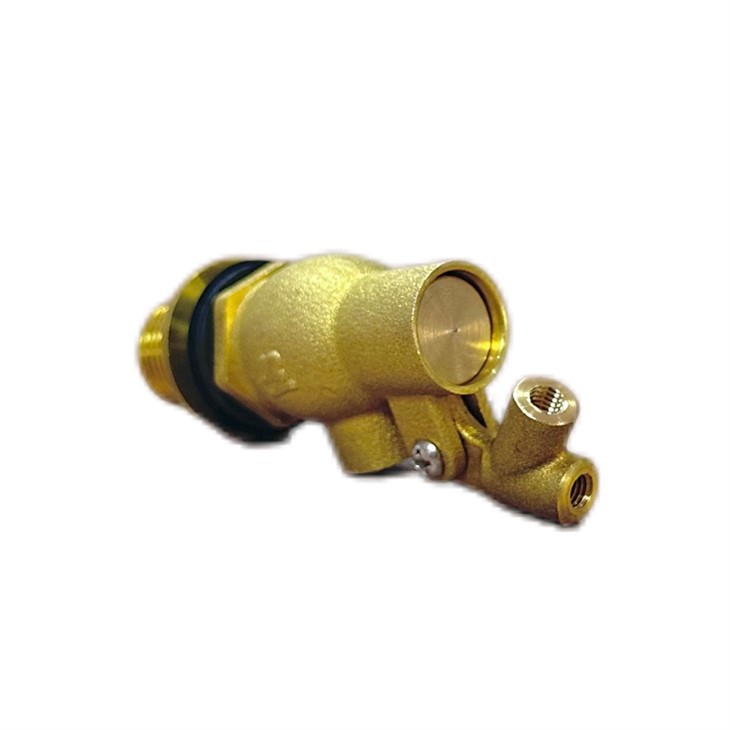
Another type of float valve that's worth mentioning is the Vertical Float Valve for Water Tank. In a vertical float valve, the float moves up and down in a vertical direction. The principle is the same as in a regular float valve, but the vertical design can be more suitable for certain tank configurations.
The float in a vertical float valve still serves the same function of detecting the liquid level and controlling the valve. When the liquid level drops, the float moves down, opening the valve. When the liquid level rises, the float moves up, closing the valve.
One of the great things about plastic float valves is their durability and affordability. Plastic is resistant to corrosion, which means the float valve can last a long time, even in harsh environments. And compared to metal float valves, plastic ones are generally more cost - effective.
Now, you might be wondering about the different types of floats. There are various shapes and sizes of floats available. Some floats are spherical, while others are cylindrical. The choice of float depends on the specific application and the requirements of the tank.
For example, a spherical float might be more suitable for a tank where the liquid level needs to be measured accurately in all directions. A cylindrical float, on the other hand, might be better for a tank with a more restricted space.
In addition to controlling the liquid level, the float in a plastic float valve also plays a role in preventing water hammer. Water hammer is a phenomenon that occurs when the flow of water in a pipe is suddenly stopped or started. This can cause a shock wave in the pipe, which can damage the pipes and other components.
The float in a plastic float valve helps to gradually open and close the valve, which reduces the chances of water hammer. By controlling the rate at which the valve opens and closes, the float ensures a smooth flow of water in and out of the tank.
If you're in the market for a plastic float valve, it's important to choose the right one for your needs. Consider the size of your tank, the type of liquid you'll be using, and the required liquid level. You also need to make sure that the float valve is made of high - quality plastic that can withstand the conditions in your application.
As a supplier of plastic float valves, I can offer you a wide range of options. Whether you need a simple float valve for a small water tank or a more complex one for an industrial application, I've got you covered.
If you're interested in learning more about our plastic float valves or if you have any questions about the function of the float, feel free to reach out. We're always happy to help you find the right solution for your needs. And if you're ready to make a purchase, we can start a productive discussion about the best way to meet your requirements.
In conclusion, the float in a plastic float valve is a crucial component. It's responsible for maintaining the desired liquid level in the tank, preventing overfilling, reducing water hammer, and ensuring the smooth operation of the system. So, the next time you see a plastic float valve, you'll know just how important that little float is.
References
- General knowledge about float valves and their components from industry experience.
- Technical specifications and research on plastic materials used in float valves.